

Super Bowl LX: More Than a Game
February 10, 2026Super Bowl LX was more than a game. From Seattle’s win to Bad Bunny’s historic halftime show, it became a global cultural moment!
Super Bowl LX on 8 February 2026 delivered a night that balanced elite-level sport with global cultural impact. Played at Levi’s Stadium in Santa Clara, California, the championship clash between the Seattle Seahawks and the New England Patriots became a defining moment for both franchises, while the halftime show captured international attention and sparked conversation far beyond the game itself.
With a final score of 29–13, the Seattle Seahawks claimed their second Super Bowl title through a performance built on defensive dominance, controlled execution and disciplined game management. But as with every modern Super Bowl, the story extended far beyond the scoreboard.
This was a night shaped by strategy, mistakes, pressure, performance, identity and spectacle.
The Game: Seattle’s Control from Start to Finish
From the opening whistle, the Seahawks imposed their structure on the game. Their defensive unit applied immediate pressure on Patriots rookie quarterback Drake Maye, disrupting New England’s rhythm and forcing rushed decisions throughout the night.
One of the most decisive moments came late in the third quarter when Uchenna Nwosu strip-sacked Maye, with the loose ball recovered and returned 45 yards for a Seahawks defensive touchdown. That single play shifted momentum completely and effectively sealed the outcome of the contest.
New England’s problems were not limited to one mistake. The Patriots struggled with dropped passes at critical moments, red-zone penalties that killed momentum, and repeated breakdowns in pass protection. Several promising drives stalled due to holding calls, false starts and miscommunication along the offensive line, leaving Maye under constant pressure and unable to establish any sustained rhythm.
Seattle’s defensive line exploited these weaknesses relentlessly, collapsing the pocket and forcing hurried throws. Even when New England created openings downfield, execution errors prevented them from capitalising.
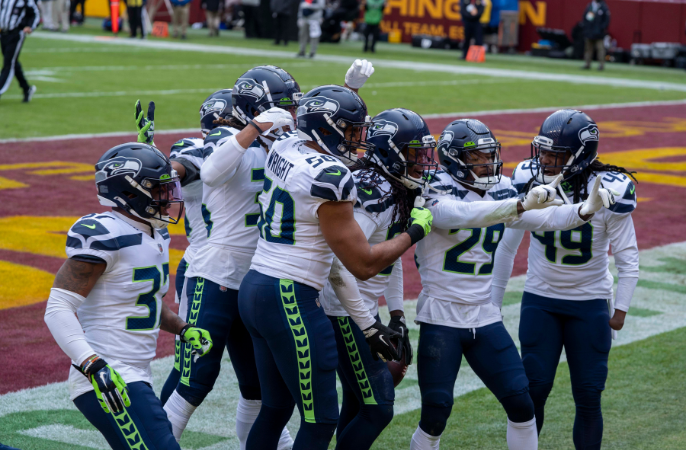
Seattle, by contrast, played a composed, disciplined game. Field position was managed carefully, the football was protected, and pressure situations were handled with control rather than risk. Kicker Jason Myers played a key role in maintaining Seattle’s advantage, converting five field goals, a Super Bowl-record performance that kept the scoreboard ticking even when touchdowns were not available.
While the Patriots managed a late touchdown, it arrived too late to change the direction of the game.
Super Bowl MVP: Kenneth Walker III
Seattle running back Kenneth Walker III was named Super Bowl MVP after a commanding performance that shaped the flow of the contest. He finished with 135 rushing yards on 27 carries, consistently breaking tackles, controlling tempo and forcing New England’s defence into reactive positions.
Walker’s physical running style allowed Seattle to dominate possession and dictate pace, limiting New England’s opportunities to mount any sustained comeback. His ability to gain tough yards under pressure became a central pillar of Seattle’s offensive structure.
His MVP award also marked a rare moment in Super Bowl history, as the first running back to win the honour since 1998, highlighting the impact of his performance in a game dominated by defence and control rather than explosive offensive plays.
Key Turning Points
While Seattle led early, the game was not fully decided until the third quarter. The strip-sack touchdown by Nwosu was the defining moment, shifting energy, field position and belief entirely in Seattle’s favour.
Additional turning points included multiple Patriots red-zone penalties that wiped out scoring opportunities, dropped third-down passes that would have extended drives, and repeated breakdowns in protection that left Maye exposed to pressure.
Seattle’s ability to capitalise on these errors, while maintaining discipline and structure themselves, created a clear contrast between the two sides.
Halftime Show: Bad Bunny’s Cultural Moment
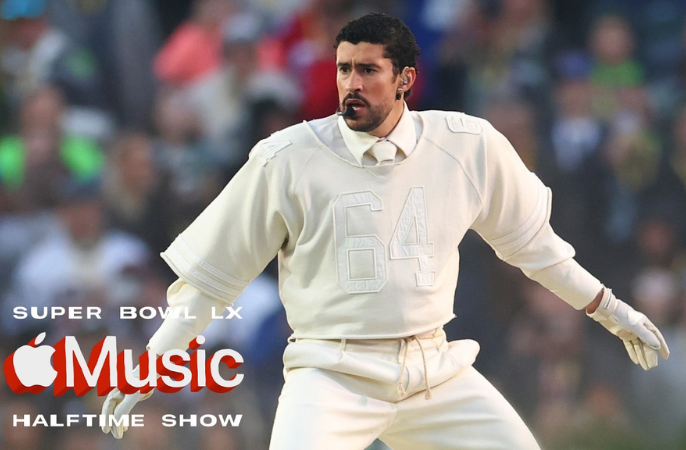
The Apple Music Super Bowl LX Halftime Show became one of the most talked-about elements of the night. Puerto Rican superstar Bad Bunny headlined the performance, making history as the first solo Latin male artist to lead the Super Bowl halftime show.
His set was built around celebration, identity and cultural pride. Performing Spanish-language hits alongside high-energy choreography and Caribbean-inspired visuals, Bad Bunny delivered a show that blended entertainment with symbolism.
Surprise appearances from Lady Gaga, Ricky Martin, Cardi B, Pedro Pascal and Jessica Alba connected global celebrity culture with Latin music influence, creating a performance that crossed genres, languages and audiences.
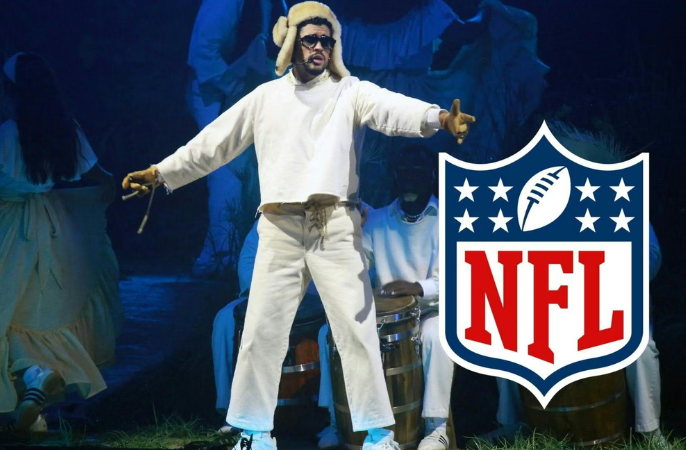
A defining visual moment came when flags from nations across the Americas filled the stage, accompanied by the message “The only thing stronger than hate is love.” Bad Bunny also introduced himself in Spanish using his full birth name, said “God bless America,” and proceeded to name every Latin American country on stage, expanding the idea of American identity beyond borders.
Journalists described the performance as: joyful, celebratory and culturally significant. Parade reported that the show “felt like a celebration,” with Bad Bunny himself stating that the moment “goes beyond myself. It’s for those who came before me.” Media commentary widely focused on the symbolism, representation and emotional impact of the performance.
Social reactions reflected the same sentiment. NFL legend J.J. Watt wrote, “Did I understand a single word of it? I did not. Was it a vibe? It was.” Safety Budda Baker added, “Idk what bro is saying but ayeeeee it’s lit!!” capturing how the performance transcended language through energy and atmosphere.
Critics and commentators also debated the performance, with some praising its cultural importance and others questioning its fit for traditional Super Bowl audiences. The discussion itself demonstrated how the halftime show now functions as a cultural forum as much as an entertainment segment.
In Puerto Rico and across Latino communities worldwide, celebrations erupted, with many viewers describing the moment as one of pride, recognition and global visibility.
Audience, Reach and Engagement
Super Bowl LX once again proved the scale of the event’s reach. Tens of millions watched live across the United States, while international audiences continued to grow across Europe, Canada, Latin America and beyond.
Social media platforms were flooded with reactions throughout the night, with highlights, clips and commentary spreading instantly. Many viewers described Bad Bunny’s halftime performance as the highlight of the broadcast, particularly in a game where defensive dominance limited high-scoring drama in the first half.
The Super Bowl’s ability to unite sports fans, music audiences, pop culture followers and casual viewers into a single moment of attention remains unmatched in modern media.
Sport, Culture and Global Impact
Super Bowl LX demonstrated how the event now operates on multiple levels at once. It remains a championship football contest defined by preparation, execution and performance under pressure. But it also functions as a global cultural platform where music, identity, media and representation intersect.
Seattle’s victory was shaped by defensive discipline, capitalising on opponent mistakes and controlling the rhythm of the game. Kenneth Walker III’s MVP performance provided the offensive foundation. Jason Myers’ record-breaking kicking performance added consistency and stability.
At the same time, Bad Bunny’s halftime show transformed the broadcast into a cultural statement, showing how the Super Bowl stage now carries influence far beyond sport.
A Night That Defined Super Bowl LX
Super Bowl LX delivered both sporting excellence and cultural impact. On the field, the Seattle Seahawks executed with discipline, pressure and control to secure a decisive championship victory. Off the field, Bad Bunny’s historic halftime performance reshaped the conversation around representation, identity and global culture on one of the world’s biggest stages.
The night combined strategy, mistakes, performance, celebration and symbolism into a single global moment watched by millions.
From the Seahawks lifting the Lombardi Trophy, to Kenneth Walker III’s MVP performance, to a halftime show that sparked worldwide conversation, Super Bowl LX became a defining chapter in modern Super Bowl history.
If you’re ready to elevate your race day experience with Corinthian Sports, visit the #enquire section below to discover our premium hospitality packages, including the Pegasus Lounge, and secure your place at the heart of unforgettable sporting moments.
The Pegasus Lounge delivers a truly elevated hospitality experience, blending contemporary luxury with an energetic race-day atmosphere. Designed for those who want more than just a seat, the lounge offers stylish interiors, exceptional food and drink, and a vibrant social setting that feels both exclusive and welcoming.
With premium service, relaxed elegance and stunning views across the course, the Pegasus Lounge is perfect for entertaining clients, celebrating special occasions or enjoying the races with friends in a more refined environment.
Experience it for yourself. Enquire now!

Follow Us:
Like Sports? Signup to our Newsletter!
Our Latest Events:


Interested in Attending An Event?
Complete the form and download our FREE events brochure!
[gravityform id=”120″ title=”false” description=”false” ajax=”true” tabindex=”49″]